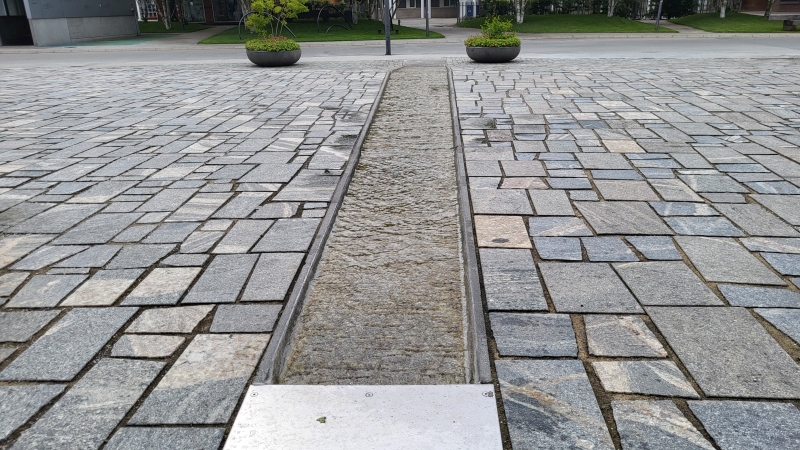
When imagining boundaries, it is easy to only see a line that looks like a fence or a wall.
But when it looks like that, it is usually man-made.
That might be the challenge when someone thinks about boundaries they should be setting. Boundaries are helpful.
Some think of them as protection against others or from others.
A different way is to think about boundaries as protecting their relationship.
All of us will regularly experience being hurt in a relationship. There is nothing wrong with this. It’s an inevitable consequence of being willing to act within a relationship. This is true for professional as well as personal relationships.
That is where boundaries come into play. They should be imagined as a zone of discomfort, an area where one notices that things feel different and maybe even uncertain. Moments, when discomfort appears, can be understood as signaling the presence of a boundary.
Instead of choosing an automatic reaction when boundaries appear and invite you to retreat or aggress the other, it is worth considering that signal. Paying attention to this signal allows one to inquire into one’s reaction and become aware of the signals in detail. It’s an exploration one can do with the other person involved. The consequence of such a conversation is that it either dissolves the felt boundary or allows both to recognize that there is a boundary both can learn to respect.
As time passes, it might shift, change, or dissolve.
By addressing it when the signal appears, one has a chance to use all the buffer available for that boundary.
The more one lets the signals fade away, the thinner the space of boundary. The higher the risk of being hurt in a way that may lead to the necessity of dissolving the relationship. Which may then be difficult to handle respectfully.